
Regional leadership changes can alter the direction of development without changing a single road, school, or water system on the day a new administration takes office. The effects usually emerge through decisions about priorities, budgets, institutions, land use, infrastructure, and public participation.
That makes leadership transition more than a political event. It is also a test of whether a region’s development model depends on individual officeholders or whether it is supported by durable rules, capable public institutions, and a shared long-term strategy.

Leadership changes affect development through five channels
A new regional administration can influence development in several connected ways:
- Strategic priorities: A government may place greater emphasis on transport, housing, industrial policy, rural services, climate resilience, or social infrastructure.
- Budget allocation: Funding can be redirected toward new projects, existing programmes, debt management, maintenance, or service delivery.
- Administrative direction: Agencies may receive new mandates, reporting requirements, management structures, or performance targets.
- Relationships across government: Regional authorities may need to renegotiate cooperation with national ministries, municipalities, neighbouring regions, and public agencies.
- Public confidence and participation: Consultation practices, transparency, and the credibility of decision-making can affect whether residents support long projects.
These channels do not operate independently. A change in transport policy, for example, may affect land-use planning, housing supply, environmental management, municipal finance, and access to employment. This is why regional development is difficult to manage through isolated projects or short-term announcements.
The first test is continuity, not loyalty to the previous plan
Leadership change does not require every existing programme to continue unchanged. Some plans may be outdated, underfunded, or poorly matched to current needs. The more useful question is whether a new administration can distinguish between projects that should be revised and the underlying commitments that should remain stable.
The OECD describes regional development as a long-term, cross-sectoral, multi-level policy challenge. Its guidance on place-based policy stresses the importance of policy coherence, implementation capacity, coordination between levels of government, and stable resources. A leadership transition is more manageable when those elements are documented rather than held informally by a small number of officials.
Practical continuity tools include published regional strategies, multi-year investment plans, project registers, open data, procurement records, asset-management systems, and clear handover procedures. These tools do not prevent policy change. They make policy change easier to evaluate.

Planning systems can outlast election cycles
Land-use and infrastructure decisions often have consequences that extend well beyond a single term of office. A road corridor can shape settlement patterns for decades. A zoning decision can affect housing costs, commuting distances, drainage, and public-service demand. A neglected maintenance programme can reduce the value of infrastructure that was built by an earlier administration.
UN-Habitat’s International Guidelines on Urban and Territorial Planning recommend linking long-term objectives with short-term management, coordinating plans across administrative boundaries, and using monitoring and accountability mechanisms to review progress. The principle is straightforward: a plan should be connected to budgets, implementation responsibilities, and measurable feedback.
This also creates room for legitimate political choice. A new leadership team may revise the location, sequence, or design of projects while preserving the broader goals of connectivity, resilience, inclusion, or environmental protection. The key safeguard is a transparent explanation of what changed, why it changed, and how the revised approach will be measured.
Infrastructure is where transition risk becomes visible
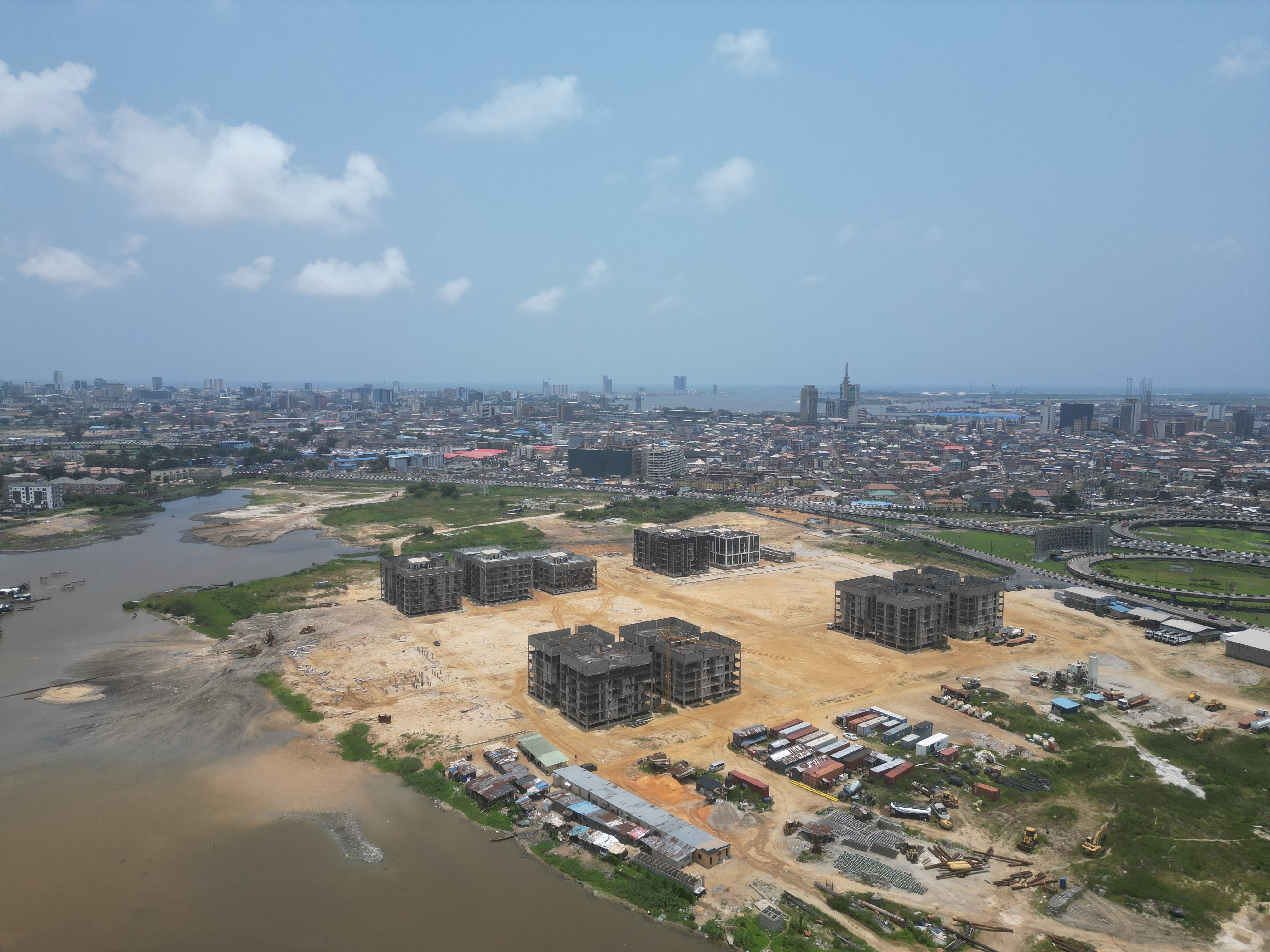
Large infrastructure programmes are especially sensitive to leadership changes because they involve long procurement periods, multiple funding sources, technical approvals, land acquisition, and future operating costs. A new administration may inherit projects that are legally committed, under construction, awaiting financing, or still at the feasibility stage. Treating all four situations as though they were the same can create confusion.
A disciplined transition review should classify each major project by its status, expected public benefit, financial exposure, legal commitments, implementation risks, and maintenance requirements. The review should also consider whether the project fits the region’s current spatial and economic strategy.
The OECD’s work on public investment across levels of government highlights the importance of clear responsibilities, aligned priorities, suitable fiscal frameworks, technical expertise, and communication between government levels. These conditions help prevent a leadership transition from becoming a break in the investment cycle.
New leadership can also improve responsiveness
Continuity is not the only possible benefit of a leadership change. New administrations can revisit assumptions, bring different expertise into decision-making, and improve communication with communities that were previously underrepresented.
A World Bank research paper on local government in Indonesia found that electoral turnover was associated with more interaction between bureaucrats and citizens and with closer alignment between public-service action and residents’ stated priorities. The findings are context-specific rather than a universal rule, but they illustrate an important point: institutional change can improve the information available to decision-makers when it is accompanied by meaningful engagement.
For that reason, a transition should not be judged only by whether it preserves the previous administration’s project list. It should also be assessed by whether it improves the quality of diagnosis. A region may make better long-term decisions after a change if it gains more reliable data, broader consultation, and clearer feedback from service users.

The difficult balance: stability with room to adapt
Long-term development requires stability, but stability should not mean inflexibility. Economic conditions, demographics, technology, environmental risks, and public needs can change faster than a formal plan.
The strongest regional systems therefore separate three things:
- Enduring outcomes: broad goals such as reliable mobility, affordable services, economic opportunity, environmental protection, or balanced territorial development.
- Adaptable strategies: the policy mix used to reach those goals, which may change as evidence improves.
- Reviewable projects: individual investments that should be tested against cost, feasibility, public value, and changing conditions.
This structure allows a new administration to offer a distinct programme without treating every earlier decision as invalid. It also gives residents and investors a clearer basis for understanding what is likely to remain stable.
What regional institutions can do before a transition
Preparedness reduces uncertainty for both incoming and outgoing administrations. Useful measures include:
- Maintain a current inventory of strategies, projects, contracts, assets, grants, and statutory obligations.
- Publish the assumptions behind major forecasts, including population, revenue, land demand, and service needs.
- Use multi-year budgets that show capital costs alongside future operation and maintenance costs.
- Record which decisions require regional, national, municipal, or cross-border coordination.
- Set outcome indicators that can be tracked across changes in leadership.
- Provide structured opportunities for residents, businesses, professional bodies, and civil-society groups to review plans.
These measures are administrative, but their effect is strategic. They shift development from personal memory and informal relationships toward shared institutional knowledge.
Why the regional scale matters
Many development problems do not fit neatly inside one municipal boundary. Housing markets, labour markets, transport networks, watersheds, energy systems, and environmental risks often operate across several jurisdictions. A leadership change in one area can therefore affect neighbouring authorities even when the formal decision belongs to only one government.
Regional cooperation can reduce that risk. Joint investment frameworks, inter-municipal planning, shared data, common infrastructure standards, and regular coordination forums make it easier to manage changes in political direction. They also help governments work at the scale where the underlying problem actually exists.
For readers following recent regional developments, current reporting can offer context for why changes in political control attract attention. The broader development lesson is not tied to any one administration: regional transitions matter because they can alter the coordination, financing, and implementation of decisions that shape places over many years.
A durable development model is bigger than its leadership
Regional leadership changes can slow projects, redirect investment, or open the door to better public engagement. Their long-term impact depends less on the fact of turnover than on the quality of the institutions around it.
Regions are better positioned to maintain progress when they have clear strategies, transparent project records, capable civil services, predictable financing, shared data, cross-boundary coordination, and participation that is more substantial than a single consultation meeting. Those foundations preserve accountability while leaving elected leaders room to set different priorities.
The most resilient development systems are therefore neither rigid nor entirely dependent on political continuity. They make change possible without making every change destructive.